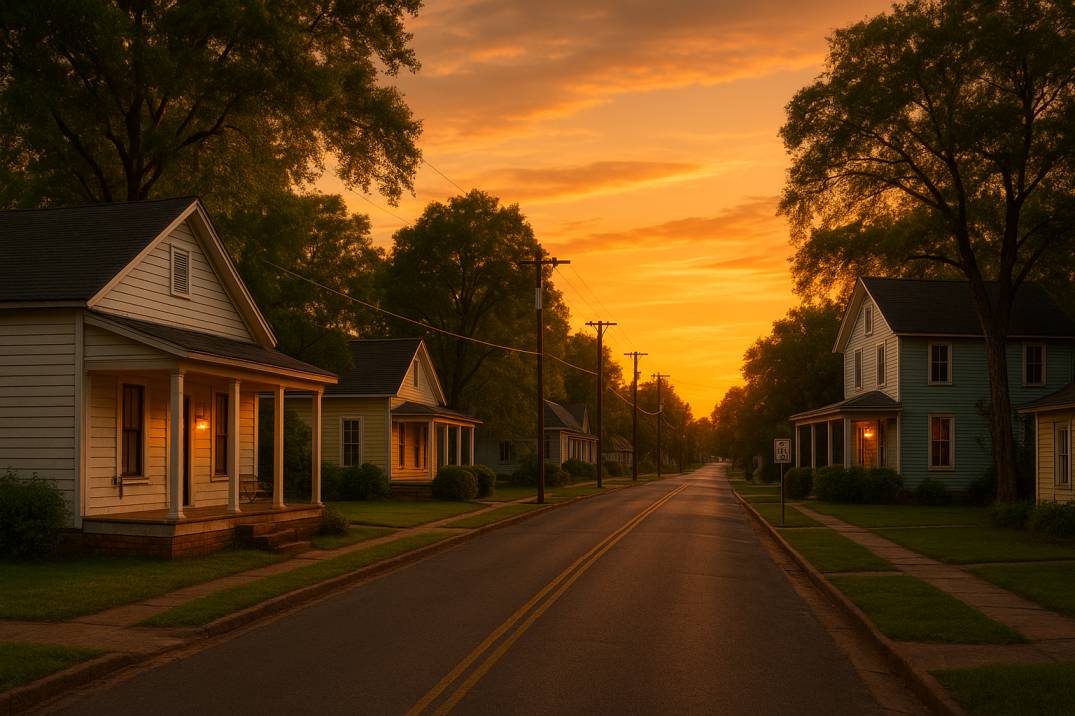
Most people discover Alabama the way you discover a shortcut you’ve driven past for years—by accident, and then suddenly it becomes the only route that makes sense. The state’s appeal isn’t loud or flashy; it’s the quiet kind of good that sneaks up on you. And a big part of that charm? The cost of living.
But “cheap” is a lazy word. Alabama’s affordability is more complicated, more human, and, in some ways, more revealing about how people actually live here. So instead of tossing around numbers, let’s break down the real cost of living—what feels light on the wallet, what doesn’t, and what newcomers never see coming.
🏡 Housing: Where Alabama Quietly Wins
If housing were a game, Alabama wouldn’t brag—it would simply win by showing up.
The average person moving from a coast or a large metro usually has the same reaction the first time they browse listings here:
“Wait…that price is real?”
Homes—whether suburban, rural, or small-town—are often priced at levels that feel like they belong to another decade. Renters feel this too: while prices have risen nationwide, Alabama’s increases have been more gentle than dramatic.
Why it stays evergreen: As long as land is abundant and growth is moderate, housing costs remain the state’s strong point.
🍗 Groceries & Daily Essentials: Manageable, But Not Magical
Grocery prices aren’t “shockingly cheap,” but they’re consistently kinder than the national average. Most people find the weekly bill sits in the comfortable middle—not bargain-basement low, not big-city high.
Small towns tend to have slightly higher prices due to limited store options, while larger cities often offer more competitive pricing.
Think of it like this:
You won’t brag to your friends about a $2 gallon of milk, but you also won’t gasp at a $7 box of cereal.
🚗 Transportation: Affordable… Until You Start Driving Every Day
Here’s the curveball: Alabama is a driving state. Except for a handful of urban pockets, public transportation isn’t built for daily life.
Gas prices are often lower than the national average, but the extra miles you drive can even things out. Car maintenance, insurance, and repairs also become part of the monthly rhythm.
If you’re moving from a walkable city, expect your fuel bill to rise. If you’re coming from a rural area elsewhere, you might actually save.
💡 Utilities: Weather Makes the Rules
Utility costs in Alabama are heavily influenced by the climate—specifically, the humidity that wraps around you like a warm blanket you did not ask for.
Most households spend the most on:
-
summer air conditioning, and
-
winter heating in the northern counties
Utilities aren’t outrageous, but they’re not the cheapest either. Think: reasonable, with occasional spikes during heat waves.
🍽️ Eating Out & Entertainment: Affordable If You Stay Local
One of Alabama’s underrated superpowers is its local food economy. Family-run restaurants, regional diners, seafood shacks, BBQ joints—these places offer generous portions at down-to-earth prices.
You can eat well without feeling like you’re paying a “big city tax.”
Entertainment follows the same theme:
-
Local festivals? Inexpensive.
-
State parks? Budget-friendly.
-
Pro sports or big concerts? Expect larger-city pricing.
It’s a lifestyle where fun doesn’t need to empty your wallet.
🧾 Taxes: A Mixed Bag People Rarely Talk About
Many people assume “the South” automatically means extremely low taxes. Alabama is more nuanced.
Property taxes:
Some of the lowest in the United States, a huge perk for homeowners.
Sales taxes:
High. In some areas, surprisingly high. This is the part newcomers notice most when stocking up at stores.
Income tax:
Moderate, not extreme in either direction.
Think of the tax system like a scale: low property taxes pull one side down, while sales taxes add weight to the other.
🧬 Healthcare: What Changes the Calculation
Healthcare costs vary widely.
Urban areas have more providers, more competition, and often more manageable prices. Rural areas—fewer choices, longer drives, sometimes higher costs due to limited availability.
Insurance prices depend heavily on employers, age, and location. It’s the one category where Alabama isn’t consistently cheaper than other states.
⭐ The Real Pros & Cons (Based on Lived Experience, Not Marketing)
🌿 Pros
-
Housing prices that consistently stay below national trends
-
Groceries, dining, and daily essentials that rarely shock you
-
Low property taxes that quietly save homeowners thousands
-
Affordable recreation and nature access
-
A lifestyle that doesn’t pressure you to overspend
⛅ Cons
-
High sales tax that catches newcomers off guard
-
Limited public transportation, increasing car-related costs
-
Utilities that fluctuate with the weather
-
Rural healthcare access can be challenging
-
Wages can be lower than national averages in some industries
🎯 So… Is Alabama Actually Affordable?
In most cases: yes—surprisingly so.
But the affordability isn’t just about numbers. It’s the rhythm of life here: slow enough to breathe, priced low enough to enjoy, yet modern enough to feel connected.
For families, retirees, remote workers, and anyone tired of overpriced city living, Alabama delivers something rare: financial breathing room.
And in today’s world, that feels priceless.