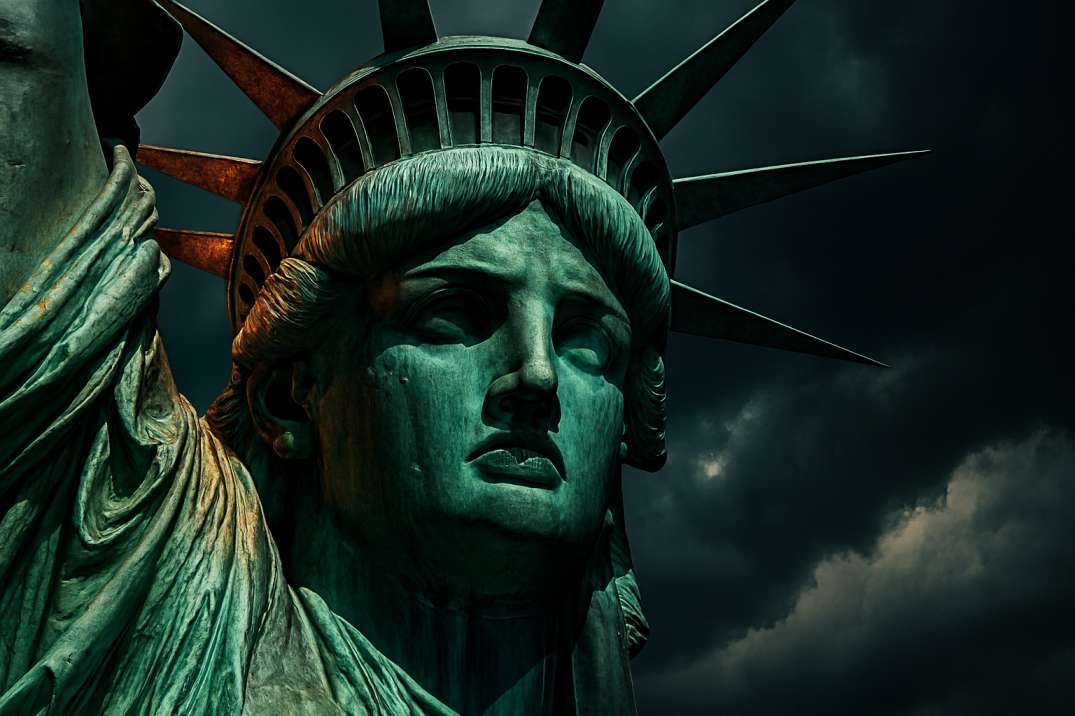
When people picture the Statue of Liberty, they see a towering green figure standing proudly over New York Harbor. But many are surprised to learn that Lady Liberty wasn’t always green. In fact, when she first arrived from France and was assembled in 1886, she was a shiny copper brown, similar to a new penny. So how did she become the soft green color we know today?
The answer lies in chemistry, weather, and time—a natural transformation that turned an engineering masterpiece into an even more recognizable symbol.
From Shiny Copper to Weathered Green: A Natural Evolution
The Statue of Liberty is made from copper sheets just 2.4 mm thick—about the thickness of two pennies. Copper is extremely durable, but it reacts with the environment. When the statue was exposed to years of rain, wind, salt air, and pollution, its surface began to change.
This color change happened gradually over 30 years, turning her brown shell into a pale blue-green surface known as patina.
The Three-Step Transformation
-
Copper + oxygen = copper oxide (dark brown/black)
This happened in the first few years. -
Copper oxide + carbon dioxide = copper carbonate (greenish tint)
As air pollution increased in the late 1800s, this reaction accelerated. -
Copper carbonate + the ocean’s salty air = copper sulfate (blue-green)
This is the color we see today.
Why the Green Color Is Important
Many people think the green layer is a sign of damage. It’s actually the opposite.
The patina acts like a natural shield:
-
It protects the copper underneath from corrosion.
-
It makes the statue more resistant to harsh weather.
-
It helps maintain the structure without constant repairs.
Experts estimate that this protective layer has saved millions of dollars in potential restoration costs.
In other words, without turning green, the Statue of Liberty might not have lasted as long as she has.
Was There Ever a Plan to Restore Her Original Color?
Yes — but it never happened.
In the early 1900s, when the color shift became obvious, some people proposed cleaning the statue to bring back its copper shine. After scientific testing, it became clear that removing the patina would actually damage the statue.
So the green stayed — and became iconic.
A Symbol Shaped by Chemistry and Time
Today, the Statue of Liberty’s green color is recognized around the world. It adds to her symbolism as a lasting monument of freedom, endurance, and hope. Her transformation wasn’t planned, but it turned her into an even more powerful landmark.
The statue’s color isn’t just a change in appearance — it’s a story of history, science, and natural preservation.